Why Choose the Outdoors?
In nature, every fallen log is a balance beam and every rustling leaf is a sensory invitation. We choose the outdoors because it isn't just a setting—it's a dynamic partner in your child's therapeutic journey. Away from the clinical feel of a gym, children find the freedom to explore, the challenge to grow, and the space to simply be themselves.

Evidence-Based Care
Research consistently shows that nature-based therapy improves sensory processing, motor skills, and emotional regulation in children.
Dive into the studies that guide our practice.
Nature as a Tool for Growth
Emotional Resilience
The unpredictability of the outdoors fosters adaptability and confidence, allowing children to navigate challenges and build a positive sense of self through accomplishment.
Sensory Regulation
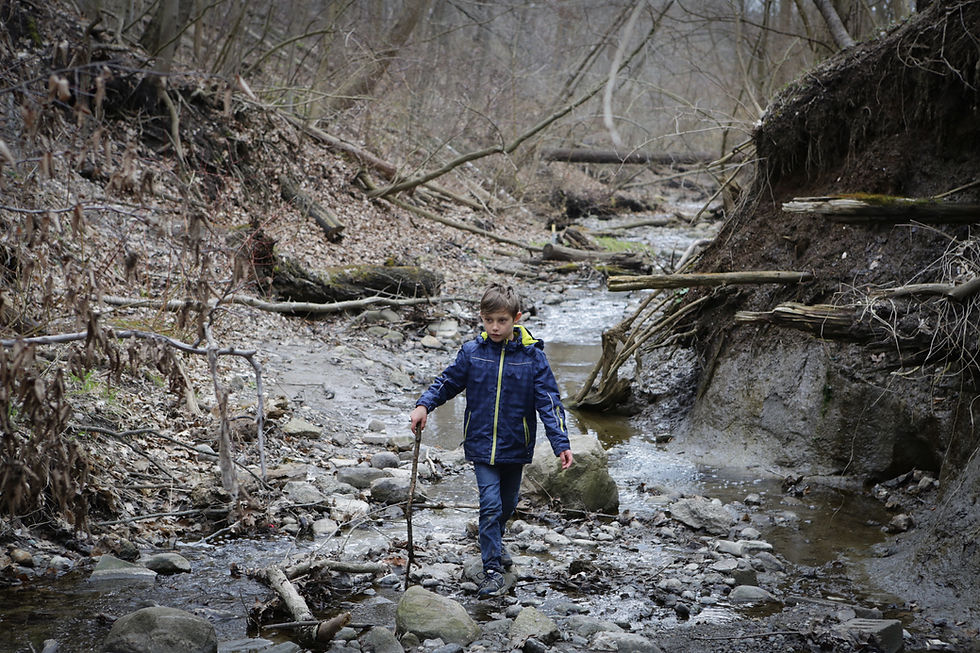
Nature provides a self-organizing sensory 'diet'. From the crunch of leaves to the calming flow of water, outdoor elements help children find their optimal state of alertness.


Creative Problem Solving
Loose parts found in nature—sticks, stones, and mud—encourage executive functioning, flexible thinking, and collaborative play without the constraints of traditional toys.

Core Strength & Coordination
Navigating uneven hiking trails and climbing natural structures builds essential postural stability and motor planning skills in a dynamic, engaging environment.
“
Children deserve to grow and learn in a place & alongside a force that is as wild and alive as they are.
Nicolette Sowder